For most of the past two years the story in buy-to-let was higher rates and thinner deals. The last few weeks have told a quieter, more useful one: the specialist lenders that price the bulk of the market have been cutting. Not dramatically, but across the board, and in the part of the market that matters most if you own property or you are about to refinance one.
Here is what moved, and why it matters more for borrowers exiting a bridge than the small numbers suggest.
What actually changed
Four of the most active lenders in specialist and buy-to-let lending trimmed pricing inside a few weeks:
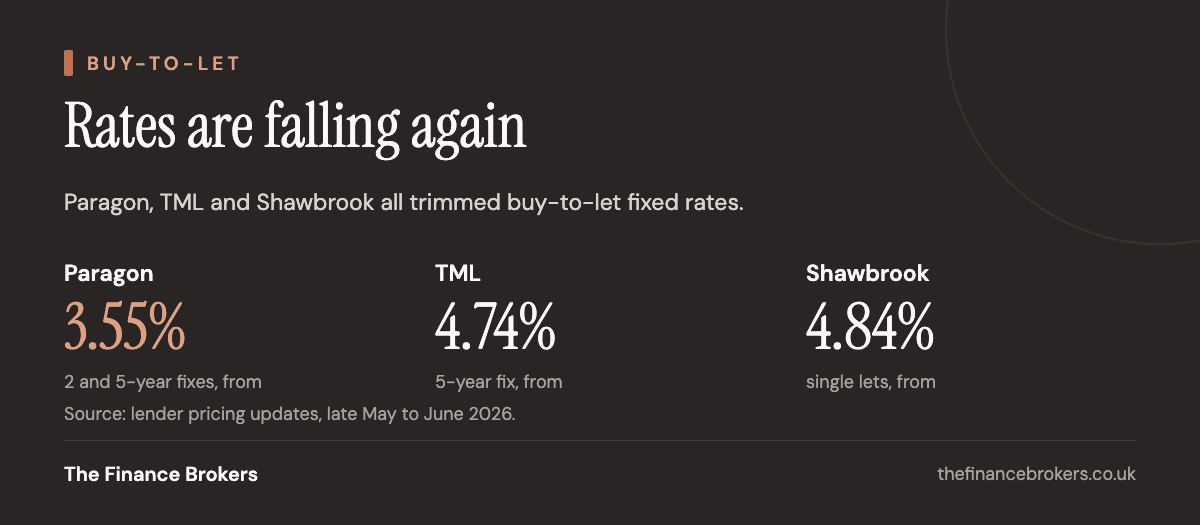
- Paragon Bank cut buy-to-let rates by 0.20% across its range on 4 June, with two- and five-year fixes now starting from 3.55% up to 75% LTV (per The Intermediary).
- Shawbrook cut specialist buy-to-let pricing by up to 25bps in late May, with single lets now from 4.84% and HMO or MUFB cases from 4.89% (Bridging Loan Directory).
- The Mortgage Lender (TML) launched a limited-edition five-year fix from 4.74%, with cuts of up to 15bps across its range (same source).
- The Mortgage Works (TMW) cut buy-to-let switcher rates for existing borrowers from 27 June, aimed at landlords re-fixing rather than moving lender.
None of these is a headline-grabbing move on its own. Together they point one way: the cost of the term products that landlords and developers rely on is easing, even as headline volumes in short-term lending have cooled.
Why rates are easing now
The backdrop helps explain it. The Bank of England held Bank Rate at 3.75% on 17 June 2026, by a seven-to-two vote, with CPI inflation at 2.8% (see the Monetary Policy Summary). Rates are not falling fast, but the market has stopped pricing in further rises at the pace it once did, and lenders competing for a smaller pool of transactions have room to sharpen pricing to win business.
That competition is the real driver. When transaction volumes soften, the lenders still active fight harder for the deals that do come through. Rate cuts are how they do it.
What it means if you are exiting a bridge
This is where the small numbers matter most. A bridging loan is short-term finance; its whole purpose is to be repaid, usually by selling the asset or by refinancing onto a longer-term product. For most landlords and developers, that longer-term product is a buy-to-let or commercial mortgage, exactly the products that just got cheaper.
So if you have a bridge maturing in the coming months, the exit you refinance onto is more affordable than it was at the start of the year. That changes the arithmetic of the exit: a lower term rate means a more comfortable serviceability calculation, which can mean a lender will support the refinance you need.
A few practical points:
- Model the exit on today's rates, not last year's. If you stress-tested your project against term pricing from 2025, the numbers have improved. Our guide to remortgaging after a bridging loan walks through how the exit refinance works.
- Start early. Cheaper rates help, but lenders have also turned more selective on leverage (the average bridging LTV has eased over recent quarters). The earlier you line up the exit, the more options stay open. See can you refinance an existing bridging loan for the routes available.
- A clean exit plan wins on terms. With lenders competing for fewer cases, a well-presented refinance with a credible exit strategy has more pricing leverage than it did at the top of the cycle.
What it means if you are buying or holding
For landlords adding to a portfolio or re-fixing an existing loan, the message is simpler: pricing is moving in your favour, and it is worth checking the whole market rather than assuming your current lender is still the sharpest. Paragon, Shawbrook, TML and TMW all moved within weeks of each other, but not by the same amount, and not on the same products. The gap between the best and the average deal is exactly where a whole-of-market view earns its keep.
The headline rates above are the starting points lenders advertise; the rate you actually get depends on the asset, the structure and how the case is presented. If you have a bridge to exit, a portfolio to refinance, or a purchase to fund, talk to us and we will price it across the panel and tell you honestly where it lands.
Further reading: LendInvest Hit a Record £1.44bn. Here's Who It's Funding: why the specialist lenders cutting these rates are increasingly built around professional and portfolio landlords, not the individual borrower. And for the commercial side of the same trend, commercial and semi-commercial rates are now falling too: HTB and YBS Commercial both cut in July.